

Inclusive facilitation goes beyond offering Reasonable Accommodations: it is about fine-tuning how a session is run so people with different disabilities, ages, lived experiences and literacy levels can learn together. This guide presents seven practical Variables of Inclusion to help you adjust formats, instructions, movement, space, roles, materials and pacing to match a training group’s needs.
Use this framework repeatedly: try 1 – 3 small adaptations per session, document what you change, reflect with your team and support persons, and build your local toolkit of tested approaches that strengthen inclusive practice over time.
Variable 1: Group-size Composition
Choose individual, pair, small-group or plenary formats to match learning goals and specific disability needs. Individual work supports concentration time, one-on-one support by facilitator or personal reflection. Pairs can help people practise social or language skills while limiting sensory load for those who struggle in big groups. Small groups offer richer exchange but need clear roles and monitoring so people with intellectual, communication or hearing differences aren’t overshadowed. Plenary works for shared briefings and energizers but must include nonverbal and/or visual ways to contribute for Deaf, nonverbal or low literacy participants. Rotate formats so diverse strengths are shared across the group.
Variable 2: Instructions and Methodologies
Present every task in multiple ways: say it, show it, then let people try it, so people with different learning profiles (visual, auditory, cognitive, neurodivergent) access the same content. Break steps into 2 – 4 parts, use live demonstrations and pictograms/ visual aids, and allow alternative responses (drawing, recording, gesture) to include low literacy learners, nonverbal participants, and those using assistive tech.
Variable 3: Movement Required
Design movement so physical or sensory limits do not block participation. Offer seated alternatives, small gestures, or tactile/visual voting so wheelchair users, people with chronic pain, low stamina, or sensory sensitivities can join. For participants with visual impairments, include clear verbal directions or tactile guidance; for Deaf participants, ensure visual cues are prominent.

Variable 4: Training Space Set-up
Set the room for disability inclusion: circle/horseshoe seating for face visibility and lip reading, clear aisles for mobility aids, well-lit interpreter sight-lines, tactile markers and verbal orientation for blind/low vision participants, and a quiet corner for sensory breaks. Small spatial tweaks often solve big access problems for multiple disability types at once.
Variable 5: Roles
Use short, voluntary participant roles to build agency while defining distinct support roles (caregiver, personal/teaching assistant, interpreter, illustrator). Brief supports to follow participant direction and avoid speaking for them. Well defined roles ensure people with high support needs get appropriate care, communication and pedagogical help without losing their voice.
Variable 6: Training Materials
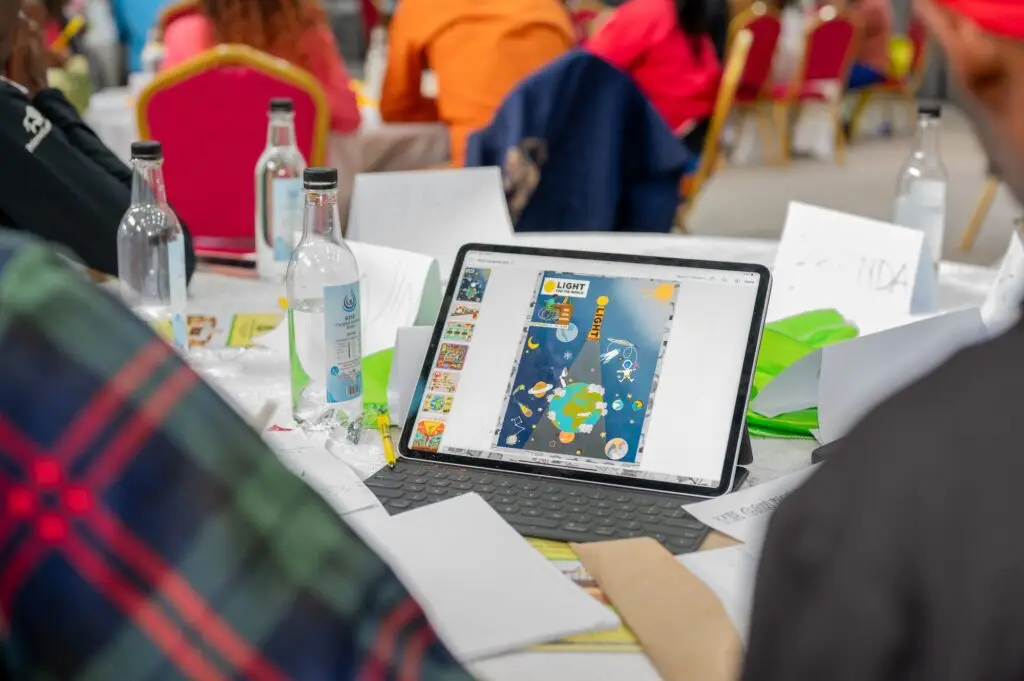
Provide Easy Read summaries, high contrast visuals with one-line captions, captioned audio/video and non-written output options so content reaches participants with intellectual disabilities, low literacy, Deaf participants, blind/low vision learners and others. Pair visuals with brief spoken descriptions and offer tactile or audio alternatives where needed.
Variable 7: Duration
Pace training sessions for processing differences and stamina: add demonstrations, practice rounds and repetition; use visible timers and an “observe → try → repeat” flow. Schedule mini breaks and a quiet corner so people with attention, sensory, fatigue or anxiety challenges can step out without missing content. Plan interpreter/assistant handovers with overlap so swaps do not interrupt access.

A quick try-out plan
Before your next session pick 1 – 3 adjustments focused on disability inclusion (e.g., demonstration + pictogram/ visual aids + seated option). Try them, ask participants and support staff what helped, and keep one change for next time. Over a few sessions you will create tested, practical tweaks that make your training genuinely accessible.
Want to share what you tried?
We would love to hear your stories: contact us at wecanwork@light-for-the-world.org. Small, well‑targeted changes add up to real inclusion.