


Disability Inclusive Programming
Inclusion doesn’t happen by accident. It’s intentional. You can achieve inclusion by integrating it strategically in each element of your program. When successfully implemented, your work can be a key to changing perceptions on disability in communities and among persons with disabilities themselves.
Integrating inclusion in each element of your program can lead to better and more active participation in society and an overall improved quality of life for young women and men with disabilities. Achieving this involves a set of deliberate efforts and adaptations aimed at removing barriers that would limit their participation.
This section of WeCanWorkAfrica.org is dedicated to helping you to get started.
Who Can Benefit from this Page?
- Upper Management can use this information to inform strategic planning for programs, program design and at an organizational level
- Programs Teams can use this information to ensure that disability inclusion is well integrated into workplans, and is being implemented efficiently
- Monitoring, Evaluation and Learning Teams can use this information to ensure they are monitoring for inclusion, and are gathering and disseminating learnings about the inclusion process
- Finance Teams can use this information to ensure that budgets for inclusion are effectively worked into each element of the program
- Communications Teams can use this information to better understand the programs approach to inclusion, enabling them to shape core messaging, and highlight stories of inclusion within their communications strategies and plans.
Budgeting for Inclusion
The We Can Work Program recommends allocating 2 – 5 % of your total program budget to disability inclusion. This will allow you to plan for the following cost drivers:
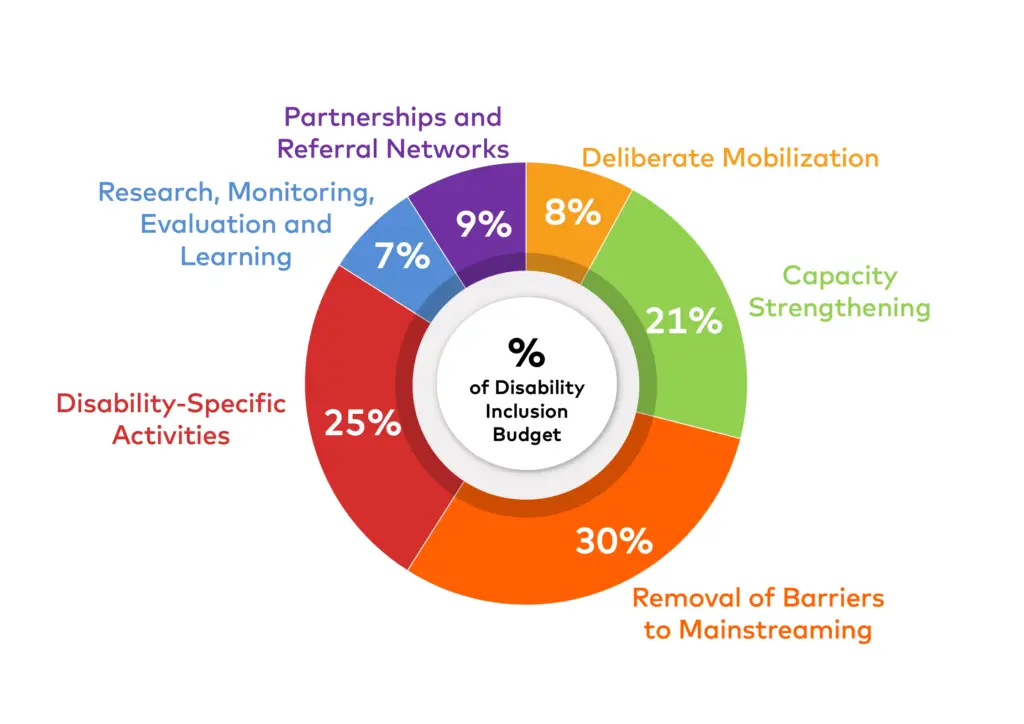
More detailed budget guidance is available in each article linked on the right.
Navigating this Section
The Disability Inclusive Programming section of this platform is organized according to the different cost drivers above. You will see a brief overview of each topic in the table to the right and can click “read more” to see a full article on each topic. This information can be used to inform the design of new programs, develop disability inclusion action plans and secure buy in from upper management.
Inclusive Programming Approach
Including persons with disabilities in mainstream programs and services is often key to changing perceptions on disability in communities and among persons with disabilities themselves, leading to better and more active participation in society and an overall improved quality of life. Achieving this involves a set of deliberate efforts and adaptations aimed at removing barriers that would limit their participation.
Disability Inclusion Capacity Strengthening
Disability inclusion capacity strengthening enhances knowledge, ability, and confidence in disability inclusion for program staff, partners, and decision-makers. It focuses on disability awareness, inclusive programming, and institutional capacity building. Budgeting 21% of disability inclusion funds supports training, expert consultations, and continuous learning. Collaboration with OPDs ensures advocacy and legal alignment.
Deliberate Mobilization
Stating that “persons with disabilities are encouraged to participate” or that a program simply “does not discriminate and is welcome to all ” is often not enough.
Partnerships and Referral Networks
Activities to mainstream disability and specific interventions towards disability inclusion, as well as monitoring and evaluation of disability inclusion all require adequate planning and earmarked budget.
Disability Specific Activities
Disability-specific activities empower young women and men with disabilities by addressing barriers to inclusion in various sectors. Programs can enhance job readiness, financial access, agriculture, digital economy, and education through tailored interventions like assistive technologies, specialized training, and inclusive policies. Budgeting 25% of disability inclusion funds supports these efforts.
Removal of Barriers to Mainstreaming
During program implementation, it is imperative to provide support and adjustments as needed by program participants with different types of impairments, to enable their full and active participation within the program. The adaptations needed to achieve this are called Reasonable Accomodations.
Disability Inclusive Monitoring, Evaluation and Learning
Monitoring and evaluation of disability inclusion is an integral part of disability inclusive programming and essential for enhancing the effectiveness of interventions towards disability inclusion within a program.