

About Isaac
My name is Muhumuza Isaac. My twin name is Kakuru, and my twin brother is Kato. Some people call me Kim. I was born in Lugazi but grew up in Rukungiri District and later, Mukono District in Uganda.
I lost my hearing at the age of nine and some of my sight at the age of eleven. I still remember the confusion I felt. Much of my childhood was spent in denial, refusing to accept that I was a person with a disability. This was largely because society had taught me that people with disabilities are incapable of doing anything. I believed it too, for a long time.
My Educational Journey
It is because of this that I studied in mainstream schools, from primary school all the way through secondary school, as the only learner with a disability. I cannot count how many times I was punished in primary school because I did not hear instructions or follow directions.
In secondary school, I lost much of my confidence because I was surrounded by students who could fully participate in activities such as Music, Dance and Drama, and I could not, because I could not hear. Classroom time was no better. Since I could neither hear nor see the blackboard clearly, I was often left to read textbooks on my own. That is how I managed to pass my secondary education: alone, in the margins.
Things did not change much when I joined university to study a Bachelor of Arts with Education, majoring in English and Literature. I was very excited to join campus, seeing it as an opportunity to finally make friends and belong somewhere. But I miserably failed. Everyone thought I was proud when they greeted me and I did not respond. Because I could not see clearly, I would walk past people I knew without recognising their faces. I was labelled proud, I lost many friends, and my self-esteem suffered greatly. University, the place I had hoped would finally feel like home, became one of the loneliest chapters of my life.
"I met Deaf people who encouraged me to learn sign language. For the first time, I saw people like me living with confidence and community."
– Muhumuza Isaac
It was at campus, however, that I first met other learners with disabilities, at the Kyambogo University Disability Support Centre. I met Deaf people who encouraged me to learn sign language. For the first time, I saw people like me living with confidence and community. Lectures remained a nightmare. They were mandatory, yet I could not follow along. I spent most of my time reading handouts, textbooks, and using Google to understand concepts. I equally could not participate in group discussions or university activities. Yet through self-study, I managed to pass my university exams with a CGPA of 4.06 out of 5.0. That result meant everything to me, because I had achieved it entirely on my own terms.
Joining the World of Work
My joy was short-lived when I entered the job market. Within the first year after graduation, all my course mates had already found jobs as teachers or were running businesses, while I sat at home, day after day, wondering what was wrong with me. I applied to over 80 mainstream schools. When I was called for interviews, I was met with words that I still carry with me: “How will you teach when you can’t hear?” and “You have excellent grades, but unfortunately…” Those unfinished sentences said everything. No matter how hard I had worked, my disability was the last word.
This is how I ended up joining Mbale School for the Deaf to volunteer as an unpaid teacher of English Language and General Paper. I was not paid, but I was finally in a classroom where I belonged. My ambition pushed me further. I learned new skills in ICT and later transferred to teach ICT at Masaka School for the Deaf in 2024.
That same year, I first heard about the We Can Work Programwhen I was invited by the National Union of Disabled People in Uganda to an advocacy training. This training introduced me to disability rights and key legal frameworks such as the UN Convention on the Rights of Persons with Disabilities (UNCRPD), the African Disability Protocol, and local laws. Something shifted inside me during those sessions. For the first time in my life, I was not being told what I could not do. I was being told what I was entitled to. I have rights. That realisation changed me. In 2024, I was also selected as one of the winners of the We Can Work Storytelling Competition.

This newfound confidence led me to apply for the Mastercard Foundation Associates Program through Light for the World. I was accepted and worked as a Disability Inclusion Intern at Light For The World Uganda. I entered the internship with small confidence but a great eagerness to learn. I was placed under the Disability Inclusion Advisory Unit, where I had the privilege of learning directly from experienced Disability Inclusion Advisors. Together, we developed concept notes and I had the opportunity to deliver disability awareness trainings to partners, something I had never imagined myself doing.
As an intern, I also contributed to writing disability inclusion articles and tips on this web platform, helping to make disability inclusion knowledge more accessible to a wider audience. I also share my own reflections, tips and experiences on my blog, Deafblind and Thriving, on Substack, which you can find at https://isaacmuhumuzauganda.substack.com/
By the time my internship ended, I was a different person. I had developed a deep and genuine passion for disability inclusion work, and the confidence I had spent years searching for had finally found me. I saw ability in action as young people with disabilities trained others, something I had never thought possible: people like me, leading.
Becoming a Leader
In 2025, I applied and was selected for the Youth Leadership Program, chosen as one of four Youth Leaders with disabilities in Uganda. This program is part of Pillar 3 of the We Can Work Program, implemented by the African Disability Forum (ADF) in partnership with national umbrella OPDs in Uganda, Kenya, Rwanda, Ethiopia, Ghana, Senegal and Nigeria, and Light for the World. The programme brought together young leaders with disabilities for intensive training in inclusive and transformative leadership, deepening my understanding of disability rights frameworks and how to apply them in practice.
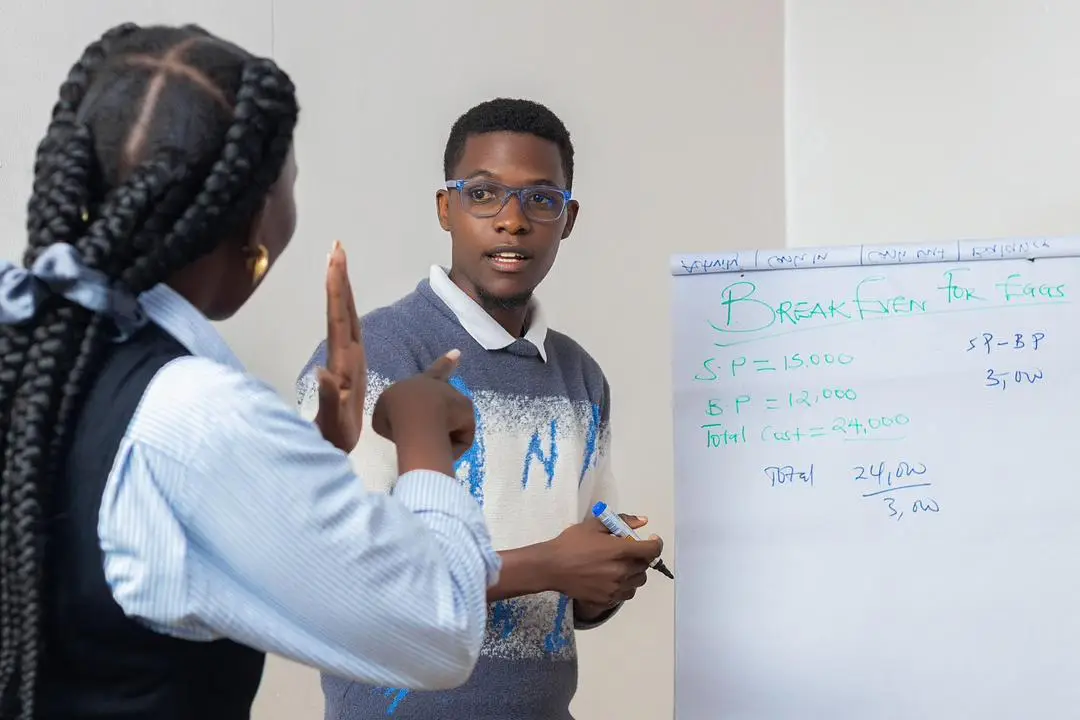
Through this program, I have had the opportunity to implement an individual project called the Youth with Disability Rights Initiative. Working across Kampala and Wakiso, I am training young people with disabilities to understand their rights under key legal frameworks including the African Disability Protocol, the UN Convention on the Rights of Persons with Disabilities, and local Ugandan laws, with a plan to reach 200 young people.
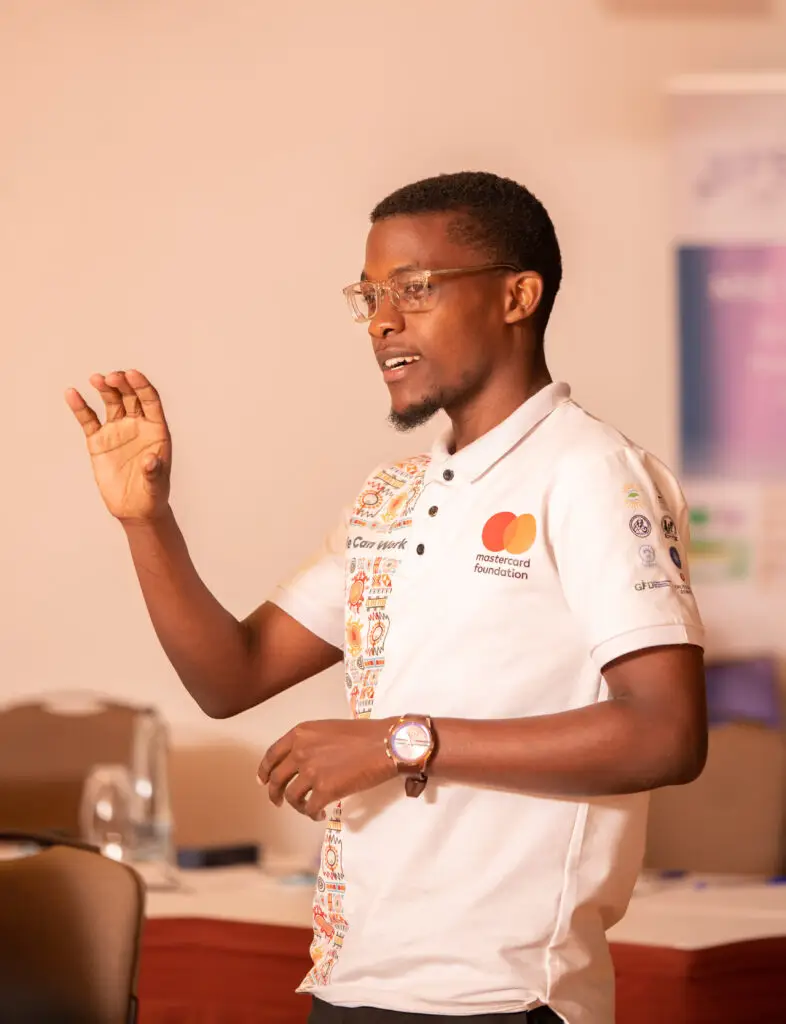
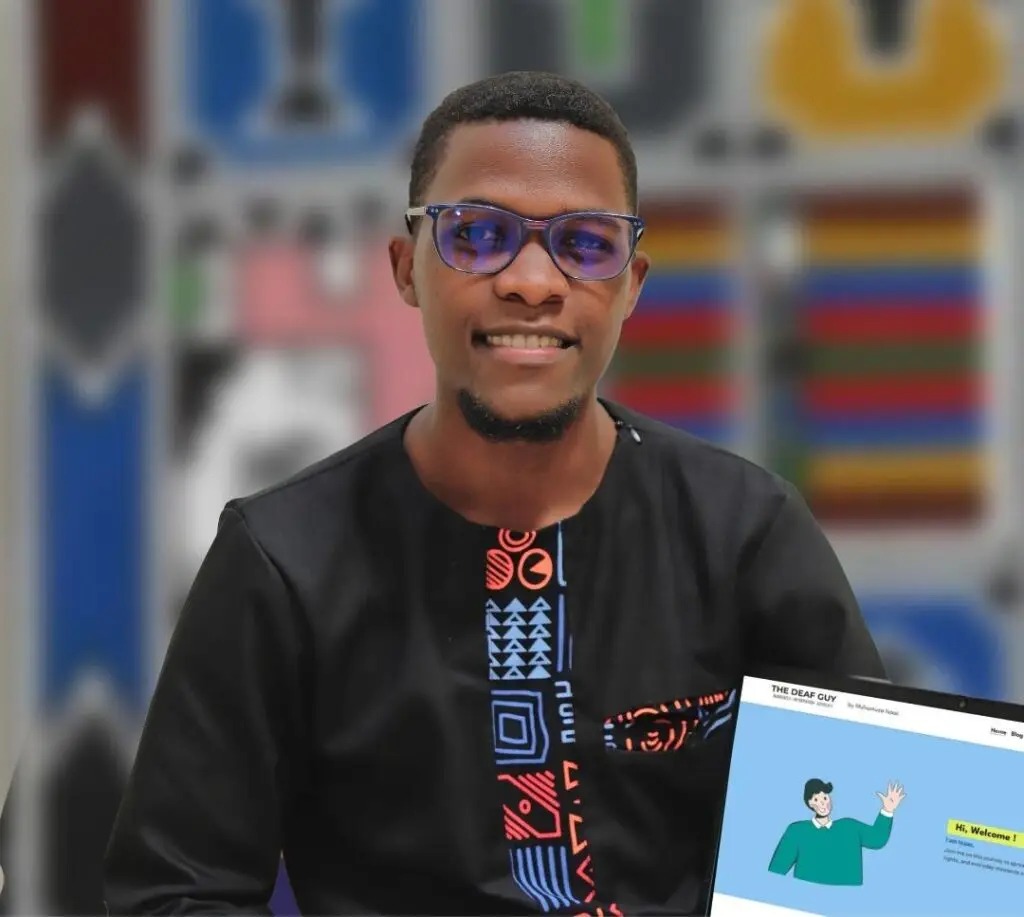
I have come to believe that knowledge is the foundation of confidence, and confidence is what makes advocacy possible. I know this because it is exactly what happened to me. I chose this project because I know exactly what it feels like to not know your rights. I spent years feeling small, feeling like a burden, feeling like the world had made its decision about me. If I can spare even one young person those years of silence, this work is worth everything.
The Road Ahead
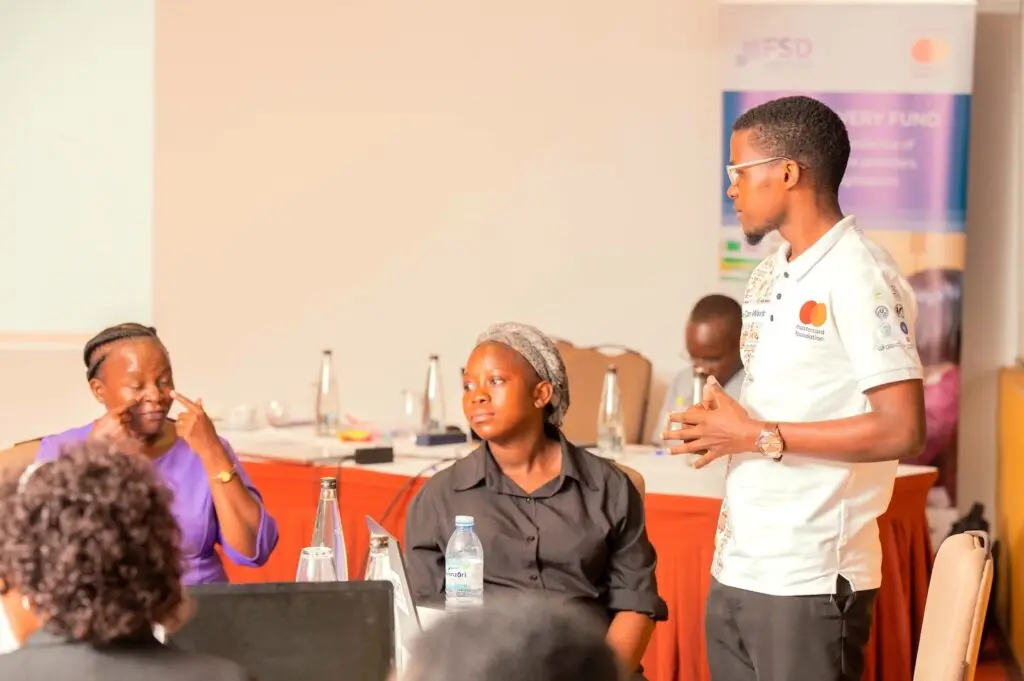
In June 2026, I will have the opportunity to speak at the 7th Inclusive Africa Conference in Kenya. I have not stood on that stage yet, but when I do, I know what I will be thinking about. The boy who was punished for not hearing. The student who sat alone in lectures. The young man who was turned away from 80 schools. I will stand there as proof that none of those closed doors were the end of the story.
Looking back, I would not be here without the We Can Work Program and everyone who believed in me before I believed in myself. In the future, I want to be a recognised global voice and expert in disability inclusion, working with international and regional organisations to ensure that no young person with a disability ever has to sit in silence and wonder if they have a place in this world. They do. I am proof of that.