


Inclusion - Exclusion
Home » Learn » Understanding Disability & Inclusion » Inclusion / Exclusion
In this section we explain the concepts of Exclusion, Segregation, Integration, and Inclusion, giving specific examples that relate to education.
The concepts: Exclusion, Segregation, Integration, and Inclusion all have in common, that they are related to ideology, practices, and policies. In the context of education, these are key concepts that should be understood as they relate to a variety of approaches to inclusion of a number of marginalized populations, including people with disabilities.
We explain each concept below, giving specific examples that relate to education.
What can you find in this section?
Exclusion
Exclusion as a concept begins from the perception of an “us” and a “them”. Where “us” refers to a majority group / gender / ideology / level of body functionality / orientation / citizenship status / race, etc. and “them” is everyone else who does not fit that the designated norm. This results in something called othering, where those outside of the designated norm are treated differently. Othering contributes to stigmatization within society.
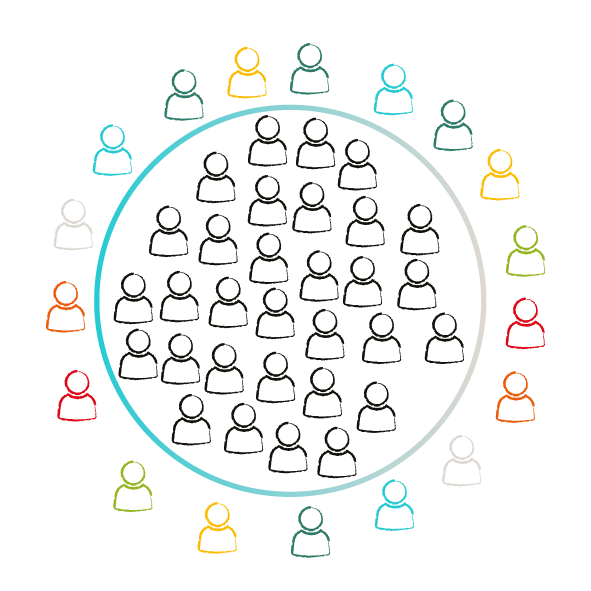
For people with disabilities, not being able to perform activities or contribute to the level of the designated norm in relation to body functionality, makes them outsiders.
As a result, negative attitudes towards people with disabilities from others in society exist, derogatory terms are used to refer to them, and a number of policies exclude them from participation in society as well as systems and processes that do not cater to their needs.
Exclusion occurs when little to no effort is made to ensure that people with disabilities can access the same programming or education as other students without disabilities, and their specific needs are not taken into account.
Segretation
Segregation refers to the separation of one thing from another. In applying the concept of an “us” and “them”, emphasis is laid on the separation of groups based on ideology / gender / level of body functionality / citizenship status / race, etc.
These groups are kept distinct from each other through a variety of policies, systems, and processes.We often see this in education in the form of “schools for the Blind” or “schools for the Deaf”. However, while these types of institutions can be helpful, this can result in stigmatization of the people who attend and don’t allow students to participate fully in society at large.
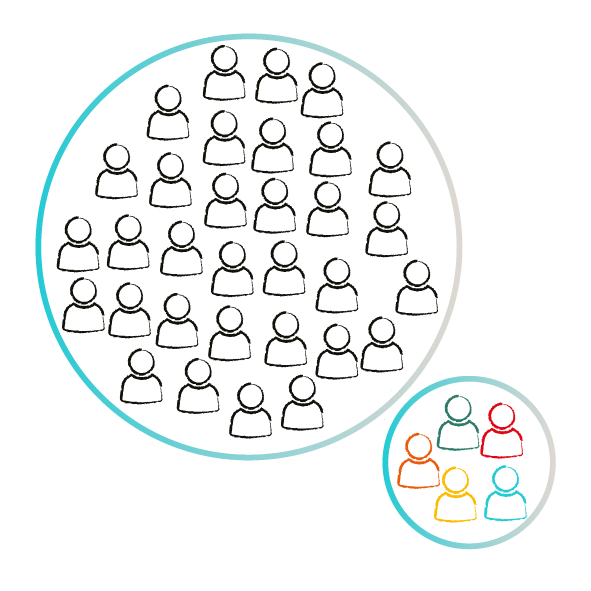
Segregation takes place in development programming when the inclusion needs of people with disabilities are considered but only catered for through specialized programs and systems made specifically for them.
For example, segregation often occurs when organizations focus on developing a disability specific program, but make little to no effort to ensure that people with disabilities can access their existing mainstream programs.
Segregated, disability specific programs can often be a first step towards inclusion within and organization. These programs can be great when participants with disabilities are also included in mainstream programming, and when they are given the element of choice as to where they would feel most comfortable and have the ability to thrive.
Integration
Integration is a step towards inclusion where while different groups coexist within the same society, the idea of a designated norm still exists which continues to alienate certain groups from the majority.
As a result, the inclusion of an individual or group is contingent on how well they assimilate or how close they are to the “designated norm”. The further one group is from fitting within the policies, systems, and processes designed for the majority, the more isolated they are.
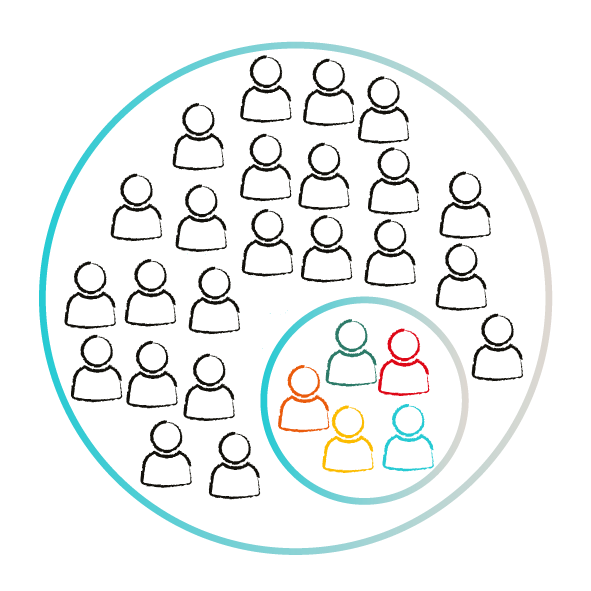
Integration can take many forms; from the initial step of inviting people with disabilities to participate to having specialised programs and systems for disability within a mainstream setting. Integration is a part of the overall inclusion journey.
For example, in relation to persons with disabilities accessing development programming, integration occurs when persons with disabilities may participate, but are still isolated within that program. This could happen for instance by grouping all of the people with hearing impairments together during a training. Although in this case they are participating, there is still separation from the group.
Inclusion
Inclusion as a concept often gets confused with integration, however, it goes further than just different groups co-existing within the same society.
Inclusion works to deconstruct the concept of a designated norm, allowing more room for a wider range of groups to accept each other’s differences and relate better with each other as equals.
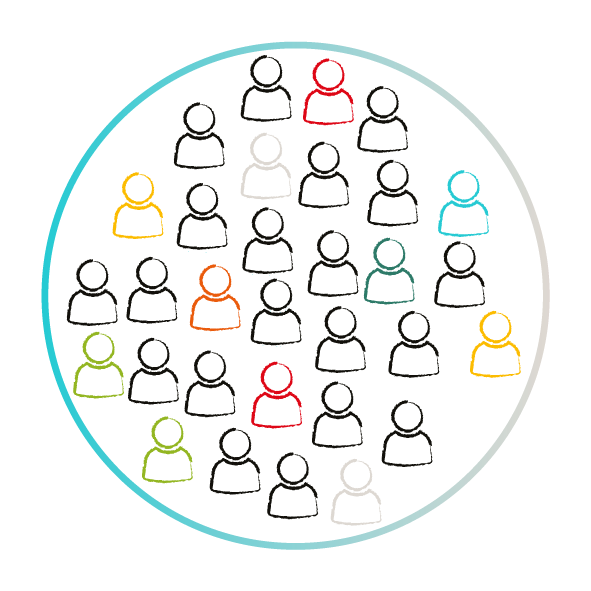
While groups based on ideology/gender/level of body functionality/orientation/citizenship status/race may still exist, policies, systems, and processes adequately cater to their varied needs.
What Inclusion Means in Practice
Across all of these spaces, inclusion requires a range of deliberate efforts to ensure that people from a wide range of identities and groups can fully participate and benefit from your work. Persons with disabilities should have a seat at the table in decision making and planning and are able to speak for themselves about the challenges they face and the solutions to those challenges.
Inclusion also involves fostering a learning culture within your work. Gathering lessons learned from your successes and challenges will help you to adapt, meet your inclusion goals and share your knowledge; playing a part in creating a more inclusive, enabling and supportive society for marginalized populations including people with disabilities.
While the concept of disability inclusion remains the same wherever it is applied, what this looks like in practice may be a bit different depending on the areas in which you work.
Inclusive mainstream programming
In mainstream development programming, inclusion occurs when conscious efforts are made to include persons with disabilities. This includes ensuring persons with disabilities are reached through deliberate mobilization, and are provided with the necessary accommodations needed to ensure that they are able to fully participate. To achieve this, programmes need to ensure that monitoring and evaluation activities fully capture the barriers that may be faced for participation and that inclusion is adequately budgeted for.
Inclusive education
In education, inclusion occurs when effort is made to ensure that persons with disabilities go to the same school as their peers without disabilities, that they are able to attend the same classes or a standard level of education that is comparable. Mainstream schools are able to cater to their learning needs and they have a variety of educational options and opportunities to pick from.
Inclusive employment
In employment, inclusion occurs when recruiters actively seek to hire staff with disabilities at all levels, and staff with disabilities are given the same types of roles and responsibilities as other employees. To achieve this hiring policies need to be adapted and recruiters may need to actively advertise roles through channels that target persons with disabilities. Provision of accommodations should be planned for, and a culture of flexibility should be embraced.
Achieving this requires more effort, buy-in and support. Wecanworkafrica.org has a range of resources to enable you to conceptualize this vision. Feel free to contact us directly for individualized support, and join in meaningful discussion on inclusion through our online community!
“There may be a lot to do, but with drive and commitment, we will achieve it!”
Join the discussion on this topic
- 7 Forums
- 10 Topics
- 14 Posts
- 0 Online
- 18 Members