

I am Emomeri Maryanne and I possess diverse skills. First, I am an assistive device innovator, a UX designer, a cybersecurity professional, a social innovator who teaches children on the intersection between disability and innovation and a self-published author. Currently, I am the communications assistant at United Disabled Persons of Kenya.
Being invited to the TechStars Startup Weekend through Employable program in 2021 gave me a fresh purpose. It made me think of ways that I could enhance the independence of people with disabilities
"As women we have the potential and must be open to take up opportunities that build our capacity for growth. I envision owning my own assistive technology company that will develop affordable and efficient assistive technologies for people with disabilities"
Emomeri Maryanne
Even though at that time I didn’t know how I was going to achieve that, I marveled at how simple ideas came to life. I felt encouraged and enrolled for a UX Design course on Coursera.
I later got an opportunity to study Cybersecurity, Networking, and a few programming languages at IT Bridge Academy. There, I interacted with different assistive technologies and people with different disabilities. I kept developing ideas and attending hackathons to get exposure and advise on how ideas could be inclusive to people with disabilities.
Recently, I was privileged to be a Fellow of the ‘AI to Amplify’ Fellowship by Goethe Institute which brought together different professionals from the Global South. My idea, Maskio, wristband, will enable people who are Deaf and people with hearing difficulties to feel sounds such as phone calls, doorbells, and emergency sounds. Maskio is in the final round of selections for prototyping.
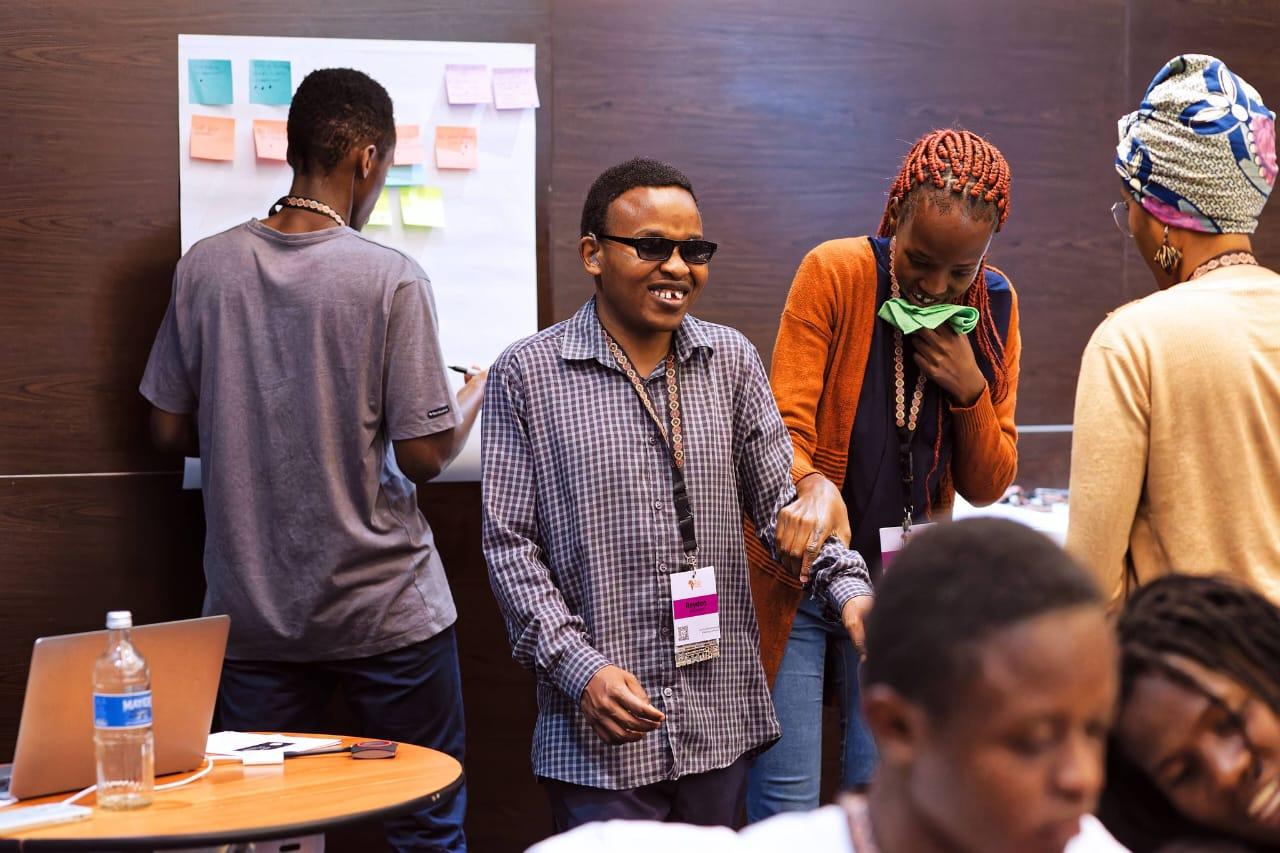

Over the years, the tech industry has been male dominated, but times are changing. Women and girls have equally shown they too are innovators and can smash the glass ceiling in the industry. I believe women and particularly women with disabilities must be intentional about gaining the right skills to confidently navigate the fast-growing tech industry. Mentorship also plays a big role in this – mentors provide wise counsel, they encourage and even help you believe in yourself when you can’t believe in your own abilities.
Beyond my tech job, I am also the founder of Watoto Wabunifu — an initiative that teaches children with and without disabilities about inclusion and innovation. The aim is for them to empathize with each other and appreciate the value of innovation in promoting inclusion. Children are smart and the earlier they learn, the better.
The idea of decent work goes beyond what most people think. It includes employing people with disabilities, paying them well, including them in decision making, promoting them to greater positions when they qualify and providing the necessary reasonable accommodation that meets their needs. It also includes making them feel part of the environment they work in; they should express themselves freely without fear.