My name is Efrem Balcha. I’m 24 years old and I live in Bodity Town, Ethiopia. I’m a husband and a proud father of three beautiful children. My life has been shaped by both hardship and resilience, and today I want to share my journey—a journey of transformation, learning, and hope.
I was born with a hearing impairment, and from a very young age, I faced challenges that most children never have to think about. The biggest blow came early in life: I lost both of my parents when I was still a child. Their absence left a deep void in my heart and in my life. Suddenly, I was alone in the world, trying to survive without guidance, protection, or love. I had no one to turn to, and I had to grow up fast.
Living without parents was incredibly difficult. I struggled daily to find food, shelter, and a way to continue my education. Many people in my village looked at me with pity. They saw a young boy with a disability and no support system. Some doubted I would make it. But deep inside, I had a strong will to survive and a dream to build a better future for myself. Organisations.
"Thanks to the confidence and skills I gained from the We Can Work Academy, I now participate in decision-making processes at the kebele level. My voice is heard, and I advocate for inclusive policies and support for people with disabilities."
– Efrem Balcha
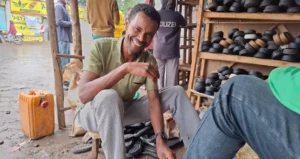
In 2008, I started working as a shoe shiner. It wasn’t glamorous, and it didn’t pay much, but it was honest work. I used the little money I earned to buy food and support my education. Balancing work and school was exhausting, but I was determined. I believed that education was my way out of poverty and isolation. After years of persistence, I completed Grade 12 in 2020. That was a major milestone for me—proof that I could overcome obstacles and achieve something meaningful.
Despite finishing school, I still faced financial challenges. My shoe shining business gave me a small income, but I couldn’t grow it.
I had no capital to invest, no equipment to expand, and no formal training in business. I wanted to do more—to provide for my family, to build a future—but I didn’t know how.
Then, in 2024, everything changed. I was introduced to the We Can Work program. This initiative focuses on empowering youth with disabilities, and joining it was one of the best decisions I’ve ever made. The program didn’t just give me training—it gave me hope. I received core life skills training, entrepreneurship education, and the confidence to advocate for myself and others like me.
As a participant in the Grow Business track, I was granted ETB 73,700. This support was life-changing. With it, I expanded my shoe maintenance workshop, bought three milking cows, six sheep, and essential shoe repair materials. I also managed to save ETB 17,000 in the bank. My daily income jumped from ETB 150–200 to ETB 600–700. For the first time, I could feed my family properly, send my children to school, and save ETB 100 every day. I felt empowered—not just as a provider, but as a role model.
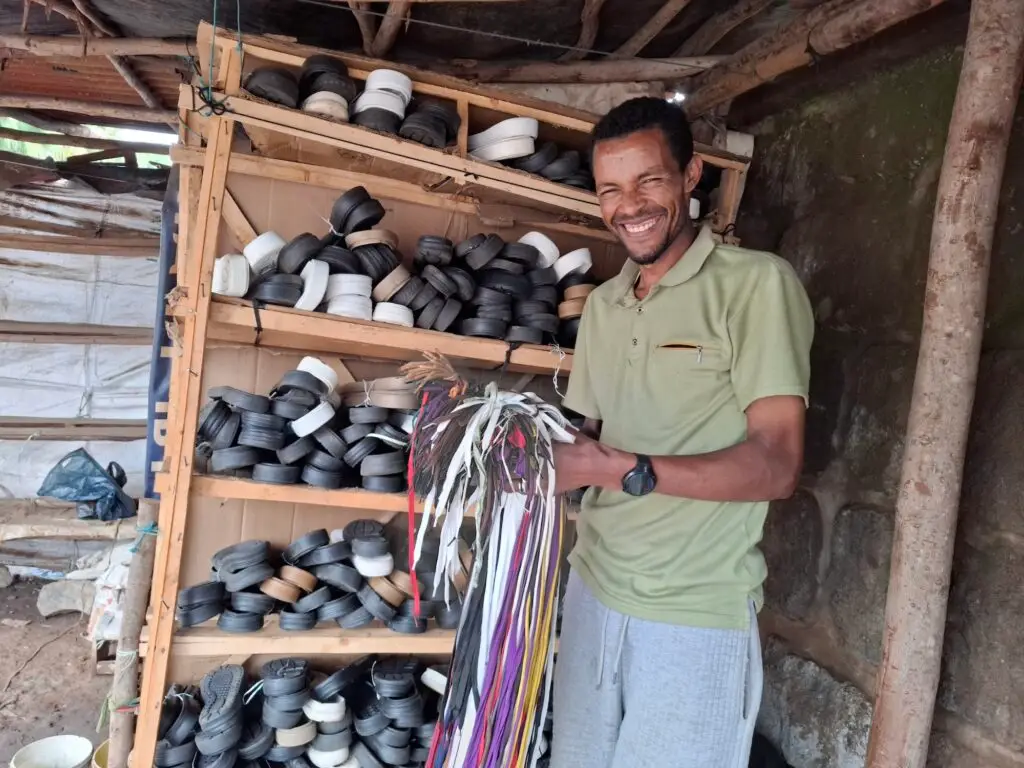
My achievements didn’t go unnoticed. I was awarded ETB 10,000 for my success in 2025, and that recognition inspired many others in my community. People with disabilities who had once hidden themselves out of shame or fear began to see new possibilities. I started mentoring six friends who also have hearing impairments. They were hesitant at first—some believed shoe shining wasn’t a respectable job. I told them, “If you don’t work, you’ll be forced to beg. But if you work with dignity, you’ll earn respect.” Today, they are running their own shoe shining businesses around my working area and earning money. They are proud of their work, and I am proud of them.
My journey didn’t stop there. Through advocacy, I identified 47 persons with disabilities in rural areas who were living in isolation due to stigma. Many of them had never received support or even been acknowledged by their communities. I reached out to them, listened to their stories, and connected them with organizations that support people with disabilities. I encouraged them to believe in themselves and to seek out opportunities. I told them, “You are equal human beings. You can do what others do. You are capable.
I’ve also become more involved in my local community. Thanks to the confidence and skills I gained from the We Can Work Academy, I now participate in decision-making processes at the kebele level. My voice is heard, and I advocate for inclusive policies and support for people with disabilities. I’ve learned that change doesn’t just happen—it’s built through action, persistence, and collaboration.
Looking back, I see how far I’ve come. I’m no longer just surviving—I’m thriving.
My life has transformed from one of hardship and isolation to one of purpose and growth. I’ve gone from being a young boy with no support to a father, a business owner, a mentor, and a community advocate.
But I’m not done yet. My dream is to upgrade my workshop with sewing and cutting machines. I want to diversify my business and create employment opportunities for others with disabilities. I envision a space where people can learn skills, earn a living, and build confidence. I want to continue supporting others, showing them that with determination and the right support, anything is possible.