Disability Etiquette &
Respectful Language

Reading Time: 3 minutes

Respectful interaction is key to disability inclusion. Following these tips will help you build meaningful connections with young people with disabilities.

Respectful interaction with persons with disabilities plays a crucial role in fostering disability inclusion. By adopting these tips, you not only demonstrate consideration but also create a more inclusive environment.

This approach helps ensure that individuals with disabilities feel valued and supported. Embracing these practices will significantly enhance your ability to build meaningful, long-lasting connections with the young women and men with disabilities that you engage with, strengthening your relationships and promoting a sense of belonging.
What can you find in this section?

Call a person by their name

Call a person with a disability by their name and refer to a person’s disability only when it is related to what you are talking about.  

For example, don’t ask “What’s wrong with you?”  Don’t refer to people in general or generic terms such as “the girl in the wheelchair.”

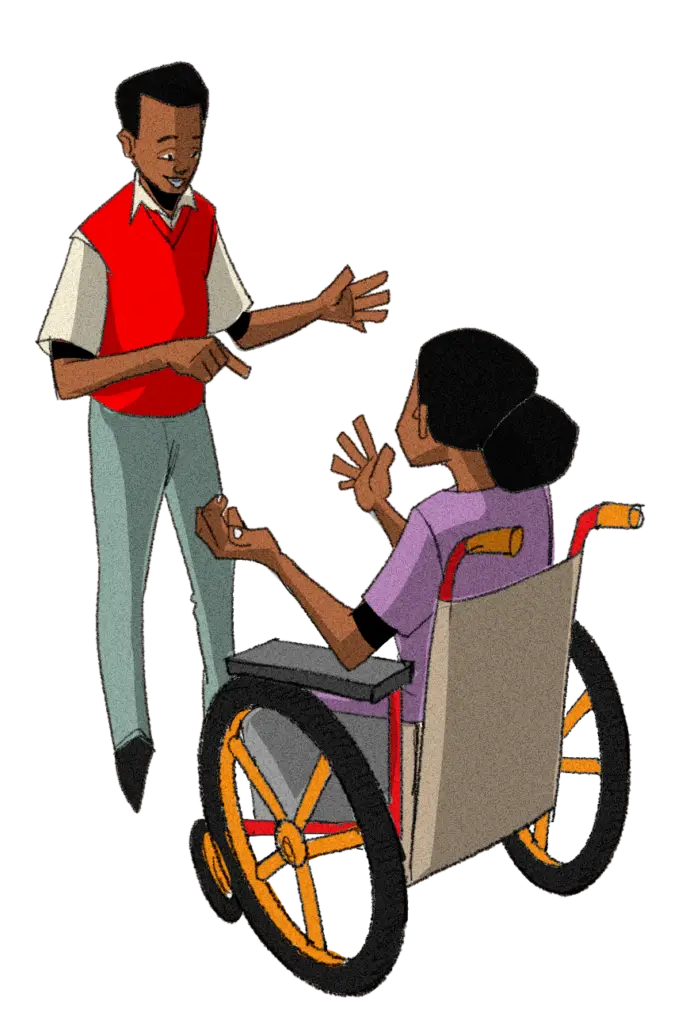
Illustration of two people standing and engaging in conversation. One person is speaking with expressive hand gestures, and the other person in a wheelchair listens and responds.
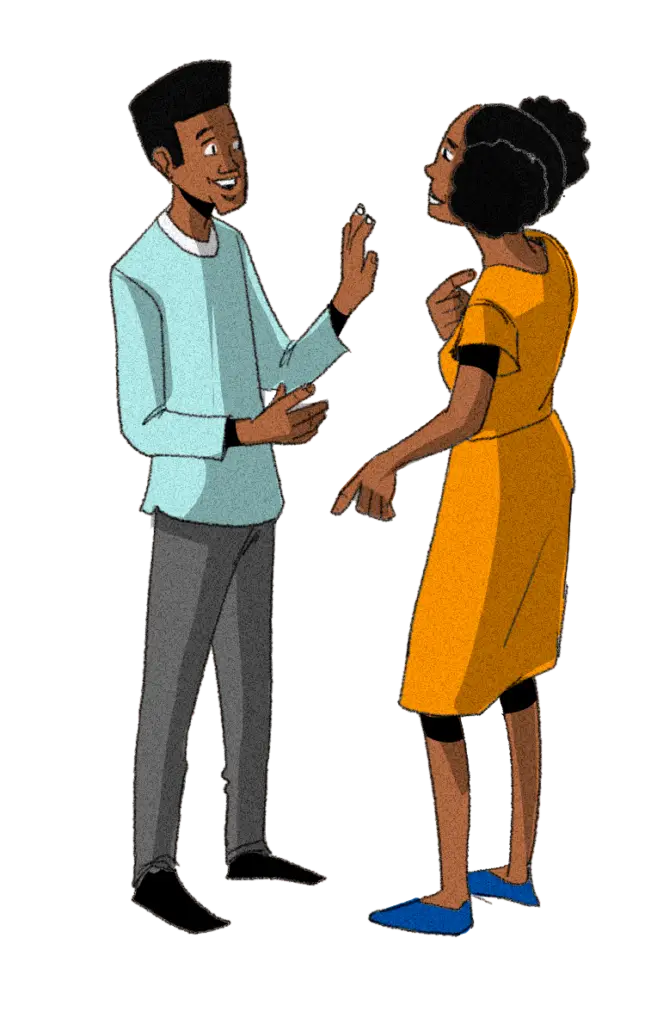
Illustration of two people standing in pairs facing each other and actively communicating. One person appears to speak while using hand gestures and the other listens and responds.

Talk directly to the person

Talk directly to the person with a disability and not to his or her assistant, when you want to talk to the person with a disability.

Use person-first language


Use person-first language. Person-first language puts the person before the impairment or diagnosis and describes what the person has e.g. “a person with diabetes” or “a person with albinism”.
Don’t reduce people to their condition, like “a diabetic” or “an albino”. A person is foremost a person and secondly a person with some trait.


Ask people with disabilities which term they prefer to use if it is necessary to discuss their impairment.

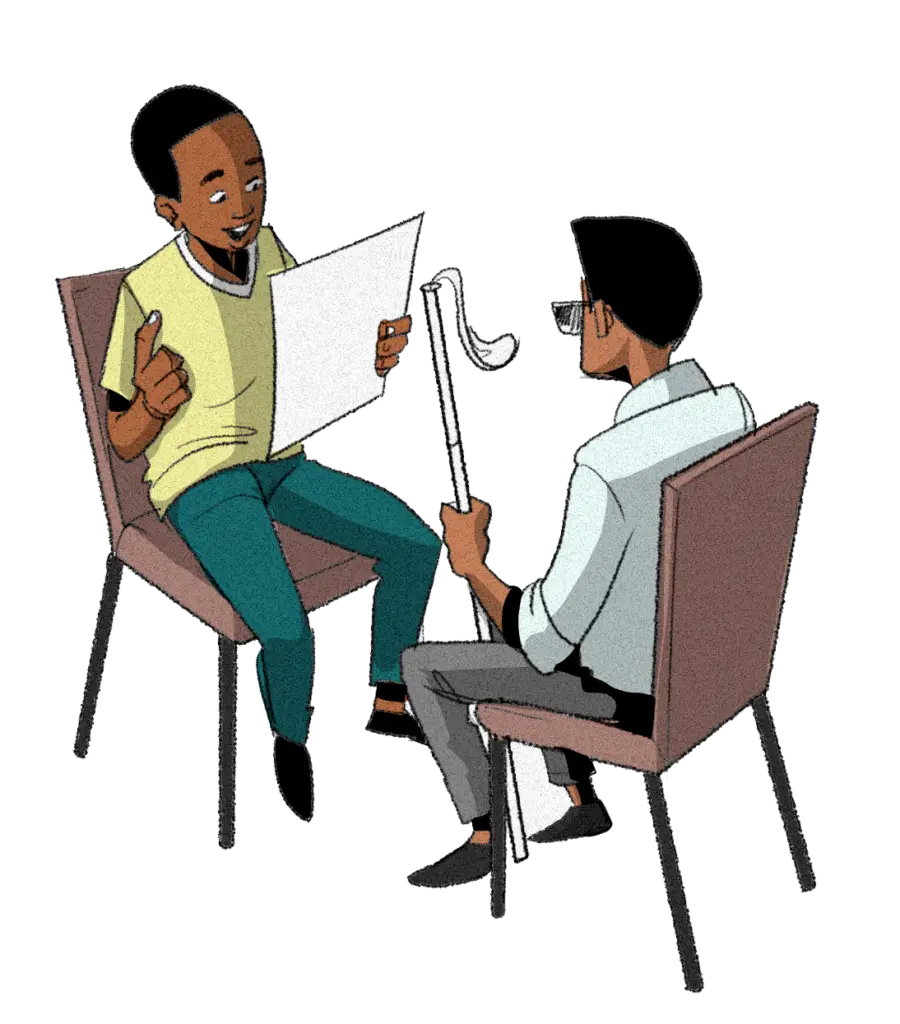
Illustration of two participants sitting in pairs facing each other. One person is speaking and reading from a paper while the other person with a visual impairment listens attentively.
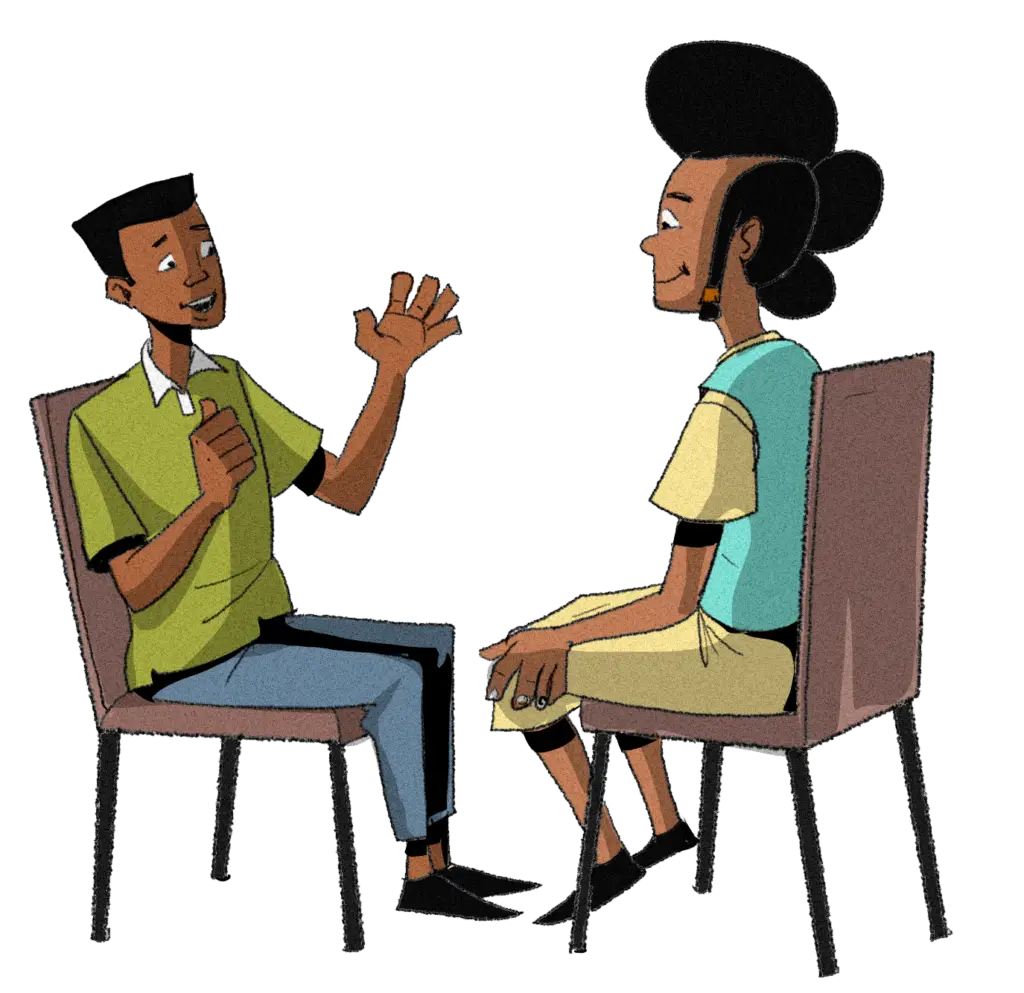
Cartoon illustration of two people engaged in conversation, depicting a discussion, counseling session, or peer education . The style is colorful and educational, aimed at youth or general audiences.

Avoid acroyms

Avoid the use of Acronyms like PWD or WWD. It is not nice to reduce people to an acronym.


Normal vs. abnormal

When talking about people without disabilities, it is okay to say “people without disabilities.” But do not refer to them as “normal” or “healthy.” These terms can make persons with disabilities feel as though there is something wrong with them and that they are “abnormal.”

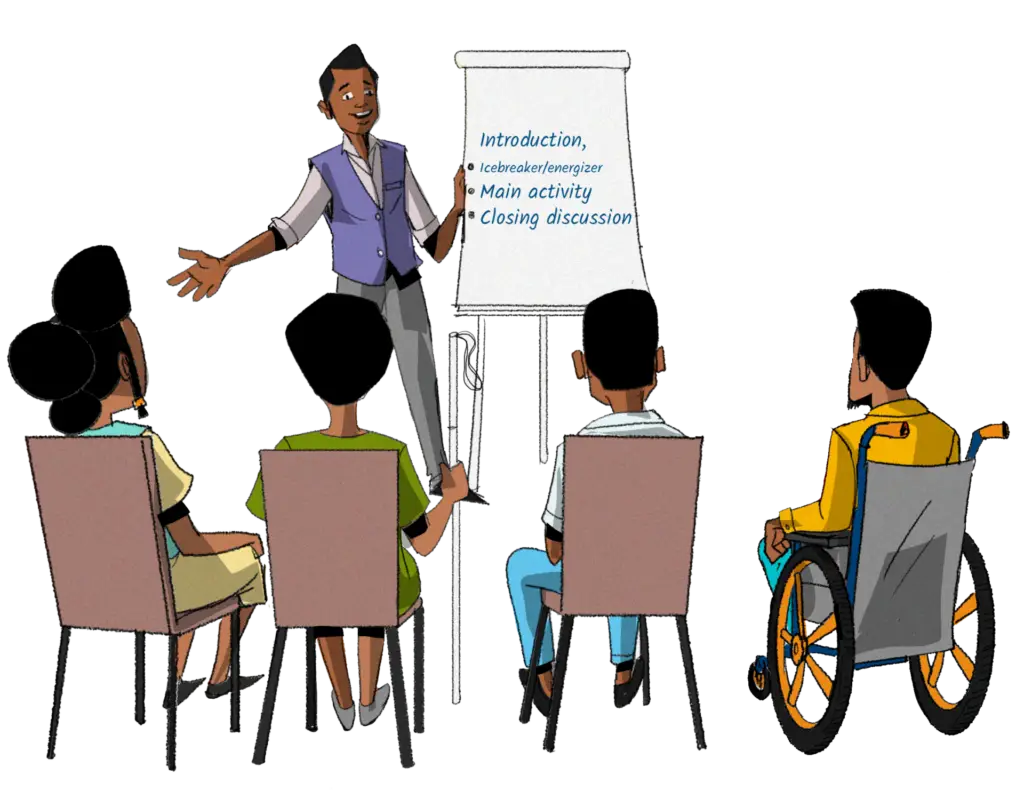
An illustration of a presentation or workshop session with an agenda outlined on a whiteboard and four participants on chairs of which one participant is in a wheelchair.
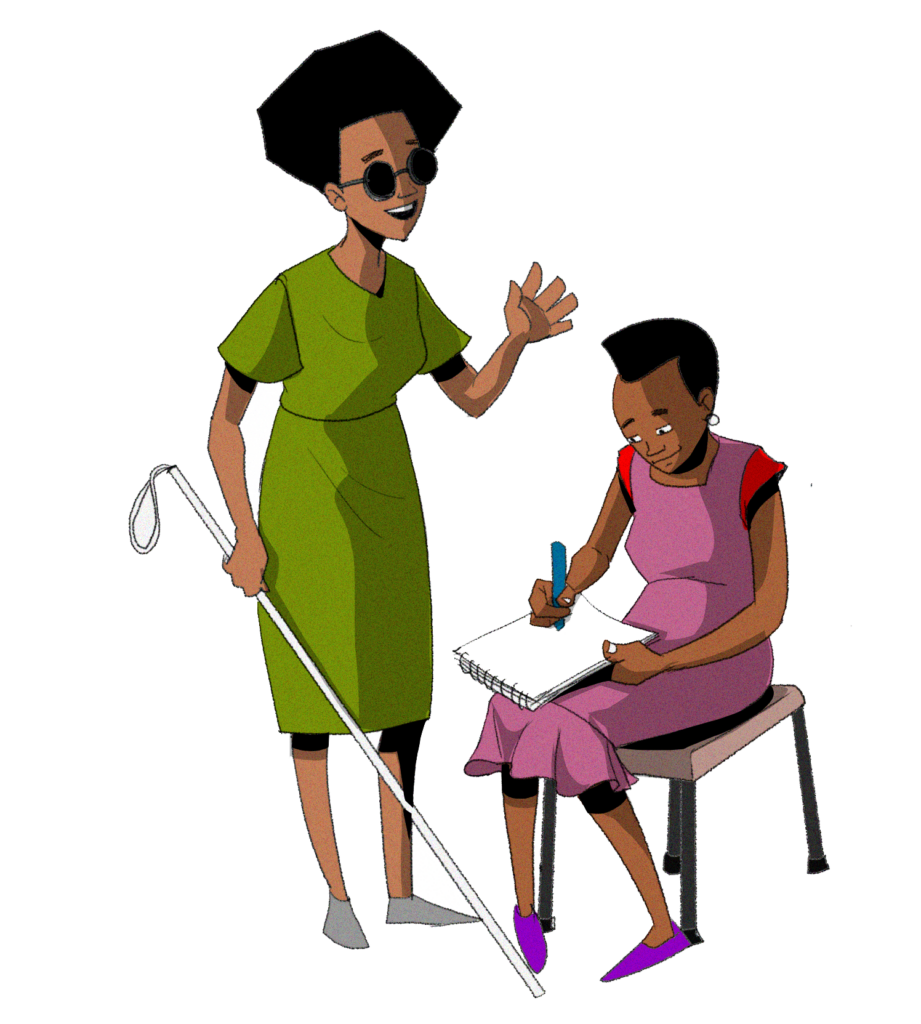
An illustration of women with a visual impairment, dark glasses in a green dress and with a cane talking to a next to women on a chair who is writing in a notebook

Avoid softened/ indirect language

Avoid using softened/indirect language to talk about disability ie. people with different abilities, special needs

While these choices are often well intentioned, using this type of language takes away from the fact that persons with disabilities have the same needs and capabilities as persons without disabilities.  Using language like this can contribute to the belief that disability inclusion is too difficult, or that persons with disabilities need to be doing certain types of work because of the impairment they have.