

In recent years, the development sector has made important progress in strengthening safeguarding systems. Many organisations now have policies, reporting channels, and investigation procedures designed to prevent and respond to harm.
But disability-inclusive safeguarding forces us to look deeper.
It does not simply ask whether safeguarding systems exist. It asks whether those systems actually work for everyone.
As the Safeguarding Lead supporting the We Can Work program implemented by Light for the World across multiple African countries, I have seen firsthand how disability inclusion can stress-test safeguarding systems. It reveals the strengths we did not know we had — and the weaknesses we often prefer not to see.
Working alongside partners and Organisations of Persons with Disabilities (OPDs) across different countries has been both challenging and deeply rewarding. Along the way, several lessons have stood out.
1. Disability Inclusion Stress-Tests Your Systems
Disability-inclusive safeguarding quickly reveals whether safeguarding mechanisms are truly accessible.
Many organisations believe they have strong systems in place anonymous hotlines, posters explaining reporting channels, online reporting platforms, or verbal awareness sessions. Yet these mechanisms often assume a single type of user.
When we look through a disability inclusion lens, the gaps become obvious:
- A hotline is not accessible to someone who is non-verbal.
- Posters are not accessible to someone with a visual impairment.
- Verbal announcements are not accessible to someone who is Deaf.
· Online reporting platforms may not be compatible with screen readers or accessible navigation tools.
This does not mean organisations should abandon these systems. Instead, it highlights the need for multiple reporting options so that different people can access safeguarding mechanisms in ways that work for them.
Perfection is rarely possible from the beginning. What matters is ensuring that good, accessible solutions exist rather than having nothing at all on the ground.
2. Attitudes and Bias Can Undermine Safeguarding Responses
One of the most complex challenges in disability-inclusive safeguarding is not technical — it is cultural.
Across many contexts, there are still deeply embedded assumptions about disability. These biases can influence how safeguarding concerns are interpreted or addressed.
For example, when a safeguarding concern involves a person with an invisible disability, the response may sometimes be shaped by assumptions rather than facts. Misunderstandings may quickly be framed as “complicated situations” simply because disability is involved.
Instead of beginning with fact-finding, some environments default to conclusions that working with persons with disabilities is difficult or problematic.
These attitudes often stem from lack of awareness or exposure, but their consequences can be serious. They can lead to delayed responses, dismissal of concerns, or failure to take allegations seriously.
Disability-inclusive safeguarding therefore requires more than accessible systems. It requires intentional work to address bias and strengthen awareness across teams and partners.
3. Safeguarding Must Consider the Wider Support Ecosystem
When working with persons with disabilities, safeguarding cannot only focus on the individual participant. It must also consider the broader ecosystem of support around them.
Many participants rely on caregivers, personal assistants, sign-language interpreters, or other forms of reasonable accommodation to participate fully in programs.
These support roles are essential. However, they also introduce additional safeguarding dynamics and risks that programs must carefully consider.
Sometimes society places caregivers and support workers in a “hero” category, assuming they can do no wrong because they assist. Yet safeguarding practice reminds us that any relationship involving power or dependency can create risk.
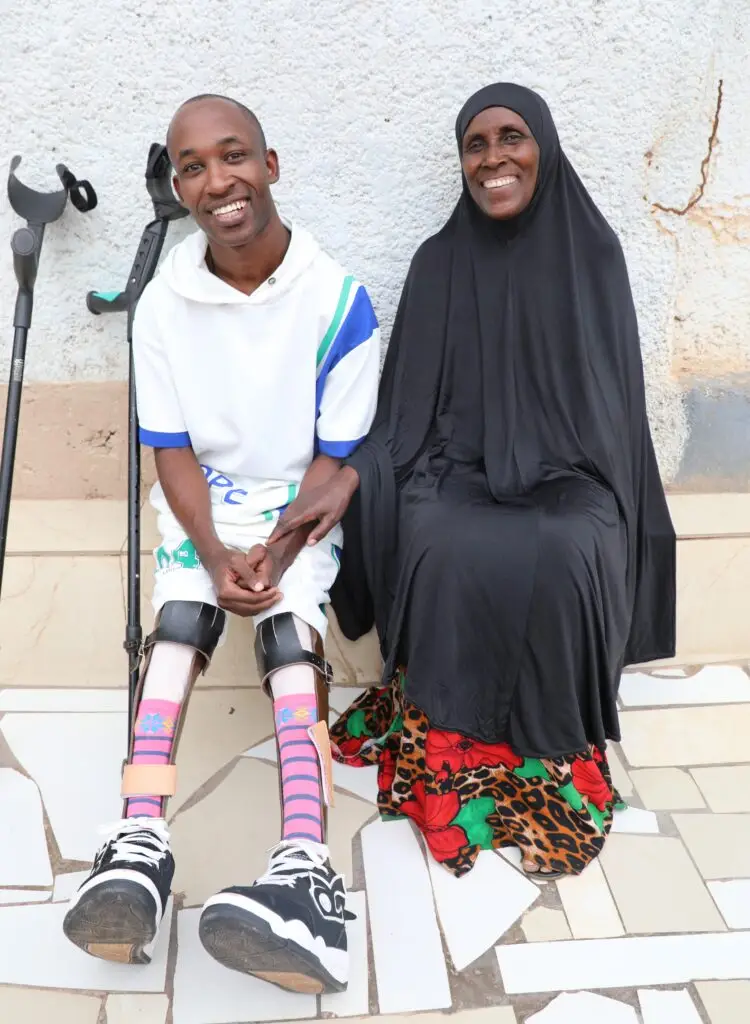
At the same time, support workers themselves may also be vulnerable. For example:
- Personal assistants may face exploitation or pressure regarding compensation.
- Caregivers may work without clear contracts or protections.
- Assistants may be exposed to emotional or physical stress.
Disability-inclusive safeguarding therefore requires looking beyond the immediate participant and ensuring that support systems are structured ethically, safely, and transparently.
4. Inclusion Sometimes Requires Creative Solutions
Programs occasionally encounter situations where participants with psychosocial disabilities may experience disruptions during activities.
In the We Can Work Academy, we have seen instances where participants with severe psychosocial disabilities may become overwhelmed during training sessions sometimes becoming loud, distressed, or engaging in behaviours that disrupt the class.
The instinctive response in many environments is simple: remove the person from the activity.
However, this response can unintentionally reinforce exclusion. Many young persons with disabilities have historically been excluded from education, employment, and social participation. Programs like We Can Work may be the first opportunity they have had to interact with peers and develop social skills.
When we take a longer view, we often see remarkable outcomes. Participants who initially struggled with engagement have later developed stronger social interaction skills, confidence, and emotional regulation.
This does not mean ignoring safety concerns. Rather, it means finding balanced solutions that protect everyone involved while still allowing the individual to participate and grow.
Sometimes the safeguarding response must be adaptation rather than exclusion.
5. Nothing For Us Without Us

One of the most important principles in disability inclusion is simple: Nothing for us without us.
Safeguarding systems cannot be designed effectively without input from persons with disabilities themselves.
It is easy to assume that designing for one type of impairment will automatically work for others. In reality, each type of impairment may require different forms of accessibility and support.
This is where working with Organisations of Persons with Disabilities (OPDs) becomes essential.
Across the We Can Work program, partnerships with OPDs have helped us better understand what safety and accessibility mean in different contexts. OPDs bring lived experience, community trust, and practical insights that external actors cannot replicate.
At the same time, these partnerships also require careful collaboration and mutual learning. OPDs operate in diverse environments, often with limited resources, and their safeguarding capacities may vary. Building strong partnerships means:
- Investing in joint learning
- Recognising local expertise
- Supporting capacity strengthening where needed
- Respecting the leadership of persons with disabilities in shaping solutions
6. Context Matters: One Size Does Not Fit All
Working across multiple countries has been a powerful reminder that disability-inclusive safeguarding cannot be standardised into a single model.
Legal frameworks, cultural attitudes toward disability, availability of services, and safeguarding infrastructure vary widely across contexts.
What works well in one country may not work in another.
For example:
- Referral pathways may be strong in one context but limited in another.
- Community perceptions of disability may influence reporting behaviours.
- Access to sign-language interpreters or psychosocial services may differ significantly.
This means safeguarding systems must remain flexible and context-sensitive, while still maintaining strong core principles.
Learning across countries has been one of the greatest strengths of the program. Partners continuously share experiences, adapt approaches, and improve systems together.
7. Leadership Buy-In Makes All the Difference
Finally, none of this work is possible without strong leadership commitment.
Safeguarding itself is sometimes treated as an afterthought within organisations. Disability-inclusive safeguarding can appear even more complex requiring additional resources, accessibility measures, and capacity building.
Without leadership recognising its importance, it becomes very difficult to implement meaningful changes.
When leadership champions disability-inclusive safeguarding, however, it sends a powerful message: inclusion and safety are not optional they are core to ethical programming.
A Journey of Continuous Learning
Disability-inclusive safeguarding is not a fixed destination. It is an evolving journey.
Even within the disability inclusion movement itself, approaches have evolved as we learn more from lived experience and practice.
Programs will not always have every system perfectly in place from the beginning. What matters is the willingness to start, learn, adapt, and improve.
This includes being open to challenge especially from persons with disabilities themselves.
Because ultimately, safeguarding systems should not just exist on paper. They should ensure that every person, regardless of ability, can participate safely, confidently, and with dignity.
And that is a goal worth continuously working toward.